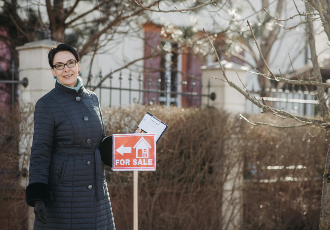
Retiring With Cash Instead of Bricks
The Psychology of Liquidating The House
For generations, the family home was treated as the ultimate nest egg — a physical, familiar form of wealth that would “take care of you” in retirement or be passed to children later. But a growing number of Canadians, particularly boomers, are choosing to sell earlier and convert that equity to cash instead of holding on.
This shift isn’t just financial. It’s psychological.
Why Some People No Longer Want to Age in a House
Many homeowners in their 60s and 70s reach a turning point where the house stops feeling like stability and starts feeling like a burden. They describe it in different ways:
- “I feel tied down.”
- “I’m spending every weekend on upkeep.”
- “I don’t want to be responsible for a furnace at 80.”
- “I want to enjoy my money while I can.”
The home may still be beautiful and mortgage-free, but the emotional weight changes. What used to represent pride and safety can slowly morph into obligation.
Liquidity = Control
A house is wealth — but it’s wealth that can’t be used without selling or borrowing against it. For some retirees, converting that equity to cash creates a mental and emotional shift:
- They can see and control their money
- They can travel without fear of repairs popping up
- They can gift money to children now instead of later
- They can move or rent without being “tied” to a single address
- They no longer feel their lifestyle is dictated by a physical asset
For many, the decision is not just practical — it restores a sense of autonomy. Cash creates options in a way that real estate does not.
The Fear That Holds Others Back
- Even when homeowners logically know they don’t need the house, emotions can override math. Common internal fears include:
- Fear of “running out” of money if they sell
- Fear of regretting a move and not getting back in
- Fear of appearing irresponsible to adult children
- Fear of losing identity — “Who am I if I leave the family home?”
Most hesitation isn’t about square footage. It’s about identity, control, and comfort with change.
Why Renting No Longer Feels “Failure” for Some Retirees
There used to be a stigma around renting in retirement. Owning was success; renting implied instability. That thinking is fading.
A growing number of boomers actively choose to rent after selling, and when asked why, they say:
- “I don’t want to be a landlord to my own roof.”
- “If something breaks, I call someone.”
- “I like the flexibility of leaving anytime.”
- “I wanted my money liquid and my life simple.”
For them, renting is not a downgrade — it’s a lifestyle upgrade funded by the asset they liquidated.
Using Equity While Alive Instead of After Death
Many retirees are also questioning the old belief that the house must be preserved for inheritance. The thinking is shifting from:
“Leave them a house later” to “Help my kids while I’m alive and they need it”
Selling earlier lets some parents:
- gift funds toward their children’s first home
- help with education or childcare
- reduce the tax and legal complexity later
- witness the benefit instead of leaving it to be distributed
Again, this is less about money and more about meaning.
A Psychological Reframe: Security vs. Quality of Life
Keeping the house often feels like the safer, more conservative choice — but only on paper. For some, holding the house actually reduces freedom and enjoyment in the years when health and mobility are strongest.
Liquidating the house is rarely about “cashing out.” It’s about trading one type of security (asset on paper) for another (liquidity, simplicity, control, and lived experiences while time allows).
The Bottom Line
The decision to sell in retirement is rarely financial alone. It is deeply psychological: how a person sees safety, legacy, independence, aging, and the time they have left.
For some, the house still represents comfort and identity. For others, selling it is the moment they finally feel free.
For generations, the family home was treated as the ultimate nest egg — a physical, familiar form of wealth that would “take care of you” in retirement or be passed to children later. But a growing number of Canadians, particularly boomers, are choosing to sell earlier and convert that equity to cash instead of holding on.
This shift isn’t just financial. It’s psychological.
Why Some People No Longer Want to Age in a House
Many homeowners in their 60s and 70s reach a turning point where the house stops feeling like stability and starts feeling like a burden. They describe it in different ways:
- “I feel tied down.”
- “I’m spending every weekend on upkeep.”
- “I don’t want to be responsible for a furnace at 80.”
- “I want to enjoy my money while I can.”
The home may still be beautiful and mortgage-free, but the emotional weight changes. What used to represent pride and safety can slowly morph into obligation.
Liquidity = Control
A house is wealth — but it’s wealth that can’t be used without selling or borrowing against it. For some retirees, converting that equity to cash creates a mental and emotional shift:
- They can see and control their money
- They can travel without fear of repairs popping up
- They can gift money to children now instead of later
- They can move or rent without being “tied” to a single address
- They no longer feel their lifestyle is dictated by a physical asset
For many, the decision is not just practical — it restores a sense of autonomy. Cash creates options in a way that real estate does not.
The Fear That Holds Others Back
- Even when homeowners logically know they don’t need the house, emotions can override math. Common internal fears include:
- Fear of “running out” of money if they sell
- Fear of regretting a move and not getting back in
- Fear of appearing irresponsible to adult children
- Fear of losing identity — “Who am I if I leave the family home?”
Most hesitation isn’t about square footage. It’s about identity, control, and comfort with change.
Why Renting No Longer Feels “Failure” for Some Retirees
There used to be a stigma around renting in retirement. Owning was success; renting implied instability. That thinking is fading.
A growing number of boomers actively choose to rent after selling, and when asked why, they say:
- “I don’t want to be a landlord to my own roof.”
- “If something breaks, I call someone.”
- “I like the flexibility of leaving anytime.”
- “I wanted my money liquid and my life simple.”
For them, renting is not a downgrade — it’s a lifestyle upgrade funded by the asset they liquidated.
Using Equity While Alive Instead of After Death
Many retirees are also questioning the old belief that the house must be preserved for inheritance. The thinking is shifting from:
“Leave them a house later” to “Help my kids while I’m alive and they need it”
Selling earlier lets some parents:
- gift funds toward their children’s first home
- help with education or childcare
- reduce the tax and legal complexity later
- witness the benefit instead of leaving it to be distributed
Again, this is less about money and more about meaning.
A Psychological Reframe: Security vs. Quality of Life
Keeping the house often feels like the safer, more conservative choice — but only on paper. For some, holding the house actually reduces freedom and enjoyment in the years when health and mobility are strongest.
Liquidating the house is rarely about “cashing out.” It’s about trading one type of security (asset on paper) for another (liquidity, simplicity, control, and lived experiences while time allows).
The Bottom Line
The decision to sell in retirement is rarely financial alone. It is deeply psychological: how a person sees safety, legacy, independence, aging, and the time they have left.
For some, the house still represents comfort and identity. For others, selling it is the moment they finally feel free.
Photo courtesy of Pavel Danilyuk
